
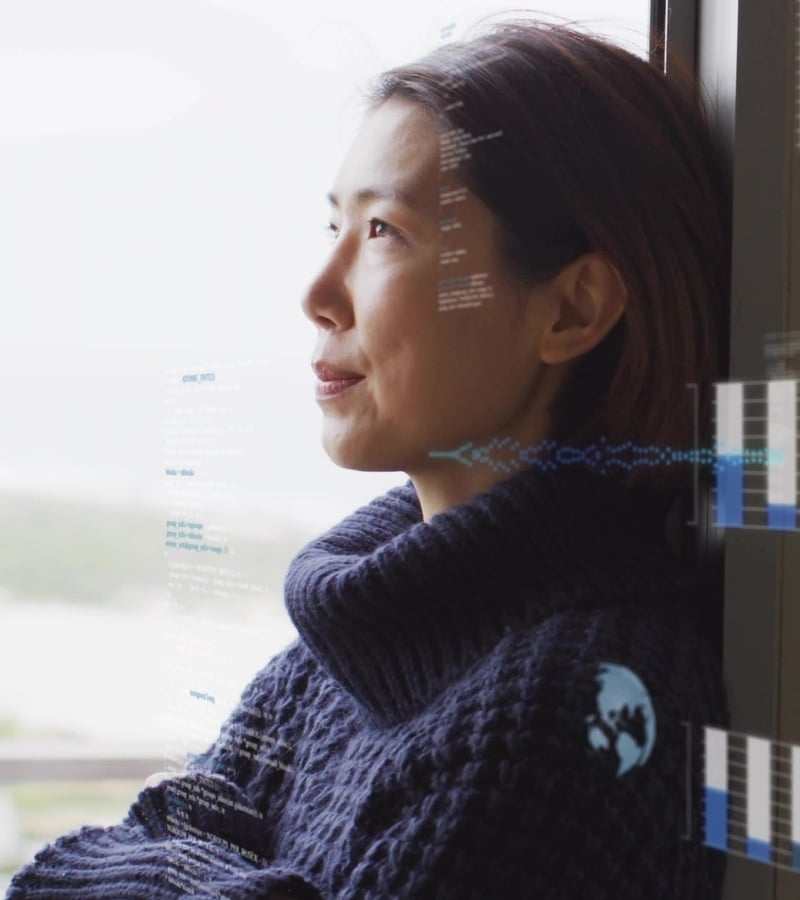
Working life asks a great deal of us. Over years, most of us develop familiar rhythms for negotiating the day, the week, the year. Ways of managing what can, in equal measure, be exhilarating and exhausting. We may learn to hold our experience of work at a certain distance. It keeps us functional. It keeps us moving.
The Master of Leadership and Management (Organisation Dynamics), along with its nested Graduate Diploma and Graduate Certificate, invites something different. It invites you to bring that experience close. To put it under the microscope.
The students who enter this program are, on average, 49 years old. They come with careers behind them, patterns established, hard questions unresolved. One student, when asked by her husband what the other students were like, replied simply: "They are just like me." His comedic horror at the thought rather made the point. These are reflective people. Individuals who, in many ways, have been researching system and organisation dynamics all their lives, without always having the language for it. Coming into contact with others who share that quality of attentiveness is itself part of the learning. The collegiate bonds that form tend to be genuine and lasting.
There is a relief for many in coming into contact with the systems psychodynamic conceptual frame. An immediate resonance with what students have previously experienced, intuited and rolled around in emotionally and cognitively at work.
The course is structured so that students establish the foundational ideas of systems psychodynamics early, then cycle through the dimensions of organisational life: culture, structure, strategy, authority, leadership, and group dynamics, deepening their understanding as they progress. Teaching staff work hard at walking the talk of that framework. In practice this means attending to their own inner experience as an everyday activity, modelling in the classroom the same quality of reflection they ask of students. It means tolerating not knowing. Being clumsy in public. Getting over one's own ego to understand that not everything we feel is ours alone, that it might also be saying something about the group we are in, the organisation we inhabit, the broader world outside.
This is not easy work. For staff or students. But it is also, for the right people, the work that makes sense of everything else.
It is worth being clear about what this course is not. It is not a leadership toolkit. It does not offer slick, marketable recipes for fixing organisations. It is not positivistic, not reductionist, not built around the idea that complex human systems can be resolved with the right framework applied confidently enough. There are many programs that offer those things. This is not one of them.
What it offers instead is something rarer: a rigorous, grounded way of understanding the reality of organisational life, the rational and the irrational, the spoken and the unspoken, the things that happen in rooms that nobody quite names. For people who have always sensed there was more going on beneath the surface of their working lives, the framework tends to land with considerable force.
And it is hard to think of a time when that kind of understanding has been more needed. Organisations and the societies they sit within are navigating a level of turbulence that makes the usual management responses feel thin. The pressures are real, the uncertainty is genuine, and the emotional labour being asked of people at work has rarely been higher. A conceptual frame that is actually equal to that complexity is not a luxury. For many leaders, it is becoming a necessity.
If you find yourself drawn to phrases like the emotional labour of work, in-depth learning, or the unconscious life of organisations, if those words land with a kind of recognition, this course may well be looking for you.
Related insights
Have you been reading organisations all your working life?
Ever wonder why formal plans rarely match workplace reality? Discover how reading organisations and systems psychodynamics turn curiosity into disciplined leadership
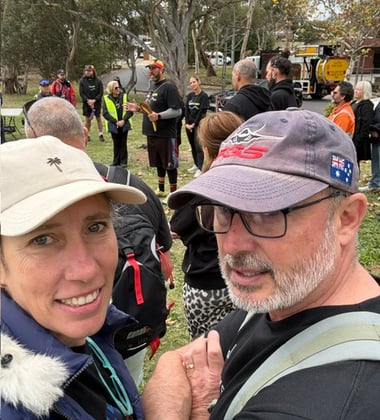
Walking Together: Reflections from the Walk for Truth
A wet Canberra morning at the Walk for Truth sparked a question: could walking together transform how teams connect, converse and reflect?

Slow Down to Lead: The Reflective Edge in Leadership and Management
Most leaders know something important is being lost in the pace of modern work. The capacity to think clearly, read the room, and lead with genuine presence gets crowded out by meetings, deliverables, and the pressure to always appear in control. Slow Down to Lead explores the reflective edge in leadership — what it means to pause without stopping, why emotion is data not distraction, and how developing a reflective practice changes not just how you lead, but how you see.